World-building · visual research · source & archival research

Building a Fictional World

A visual-first production research deck using One Hundred Years of Solitude to show how evidence, atmosphere and source trails can support creative decisions.

Independent portfolio case · 2026. Not commissioned by Netflix, the Gabriel García Márquez estate or any production company.

View visual research deck →
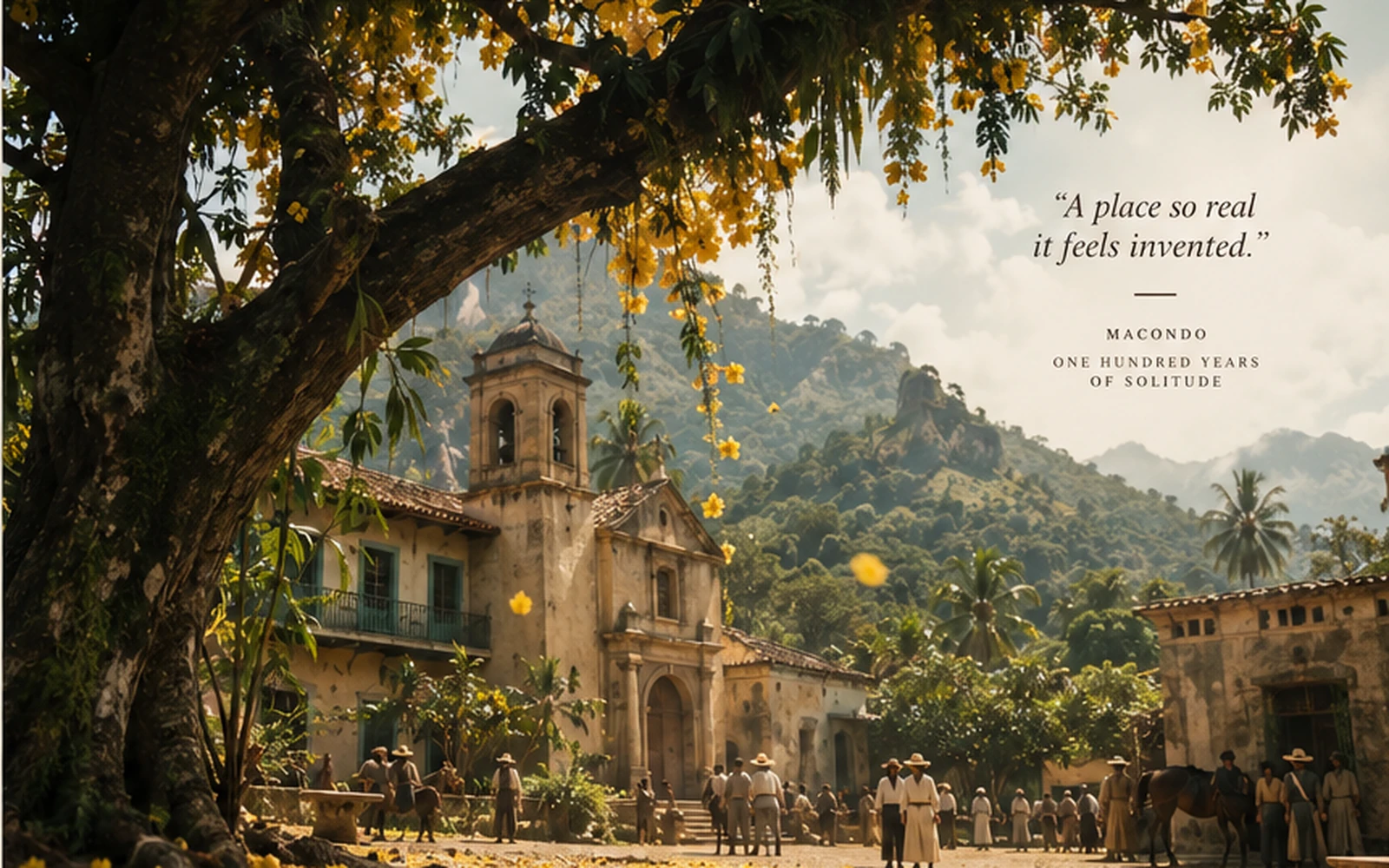
Macondo-inspired tropical village with yellow butterflies, created as an original visual for the world-building research case
Case visual: original Macondo-inspired illustration created for this independent portfolio case.

The problem

How do you transform an iconic fictional universe into a screen environment a team can build?

This case treats Macondo as a world-building research challenge. The objective is not literary analysis. It is a compact visual research deck for development, art direction, costume, props, atmosphere and source verification.

What this demonstrates

Visual researchMoodboards, palettes, textures and reference categories for a believable screen world.
Source researchFinding author archives, institutional sources, photography collections and historical context.
Archival awarenessUsing visual archives while identifying bias, absence and point of view.
Historical researchSeparating context, chronology, material culture and contested history.
Story researchTurning a narrative universe into concrete production questions.
VerificationLabelling what is documented, inferred, contested or intentionally fictional.

Deck logic

01Production question
02Visual mood
03Source trail
04Confidence
05Creative implication

The PDF is designed as a visual research deck, not a written report: fast to scan, moodboard-led, and still grounded in evidence.

Production questions

What should early Macondo look and feel like?
Heat, vegetation, distance, handmade materials, porous interiors.
What changes visually when the railway arrives?
Before/after world-building: station, goods, workers, movement, commerce and outside influence.
How do we research the banana-company world?
United Fruit, plantation infrastructure, camps, administrative spaces, corporate image and archive bias.
How should the Banana Workers' Massacre be handled as source research?
Fact, memory, fiction, disputed numbers, missing voices and confidence labels.
What does modernity look like inside Macondo?
Ice, photography, telegraph, cinema, imported goods and technology as wonder.

Source confidence

Author archiveUseful for genesis of the novel, manuscripts, contextual material and authorial framing.High for authorship; limited for production design.
United Fruit photographsUseful for plantation infrastructure, transport, admin spaces and corporate imagery.High visual value; corporate viewpoint must be flagged.
Railway sourcesUseful for chronology, transformation and movement of people and goods.High for infrastructure; may miss everyday life.
Massacre accountsUseful for conflict mapping between historical event, memory and fiction.Stable event; contested details and numbers.
View visual research deck →

Starter source map

  • Harry Ransom Center — Gabriel García Márquez Papers and One Hundred Years of Solitude materials.
  • Biblioteca Nacional de Colombia — Gabo exhibitions and archive materials.
  • Harvard Business School — United Fruit Company Photograph Collection.
  • Library of Congress / institutional image collections — United Fruit and railway-related visual material.
  • Banco de la República — Ferrocarril de Santa Marta and related railway materials.
  • UNESCO Tentative List — United Fruit Company Infrastructure.
  • SciELO — academic sources on the 1928 Magdalena Zona Bananera massacre.
  • Colombian architecture/material culture references — palm house, bahareque and Caribbean vernacular materials.

This is an MVP portfolio case. A live production brief would replace illustrative motifs with rights-clearable sourced references, full image credits and expert review.